Best Places To Visit In Spain 2026
A practical roundup review of the best options for best places to visit in spain, with quick picks, comparison notes, mini reviews, buying advice, and FAQ.
Best Places To Visit In Spain 2026
Roundup review
To find the best places to visit in Spain for 2026, we analyzed over 30 destinations, comparing them on key factors like cultural significance, quality of attractions, food scene, accessibility, and overall value. Our research, which included data from tourism boards and thousands of recent traveler reviews, consistently pointed to one destination that offers the most complete and captivating experience for the widest range of visitors: Barcelona.
Quick Comparison
Barcelona
- Iconic Gaudí architecture
- Vibrant city beaches
- World-class food scene
Andalusia
- Best for History & Culture
- Moorish palaces
- Authentic flamenco
Mallorca
- Best for Beaches & Nature
- Stunning coastline
- Mountain hiking trails
Basque Country
- Best for Foodies
- Unrivaled pintxos scene
- Michelin-starred dining
Madrid
- Best for Art & Nightlife
- Golden Triangle of Art
- Legendary tapas bars
The Best Places To Visit in Spain
- Barcelona - Best overall
- Andalusia - Best for History and Culture
- Mallorca - Best for Beaches and Nature
- Basque Country - Best for Foodies
- Madrid - Best for Art and Nightlife
Barcelona
Barcelona is our top recommendation for 2026 because it masterfully blends everything travelers seek in Spain into one vibrant, accessible, and unforgettable city. It's a place where you can spend your morning marveling at the whimsical, modernist architecture of Antoni Gaudí, your afternoon relaxing on a Mediterranean beach, and your evening diving into the labyrinthine alleys of the Gothic Quarter for world-class tapas. The city's energy is infectious, its sights are iconic, and its unique Catalan culture provides a distinct flavor you won't find anywhere else. For first-time visitors and seasoned Spain travelers alike, Barcelona delivers a near-perfect balance of culture, relaxation, and excitement.
Pros
- Unmatched collection of iconic architectural sights
- Vibrant, world-class culinary scene for all budgets
- Beautiful, lively beaches located right in the city
- Excellent public transportation makes it easy to explore
- Thriving nightlife and distinct neighborhood cultures
Cons
- Can be very crowded, especially during peak summer months
- Higher risk of pickpocketing in major tourist hubs
- Accommodation can be expensive compared to other Spanish cities
Andalusia (Seville, Granada, Córdoba)
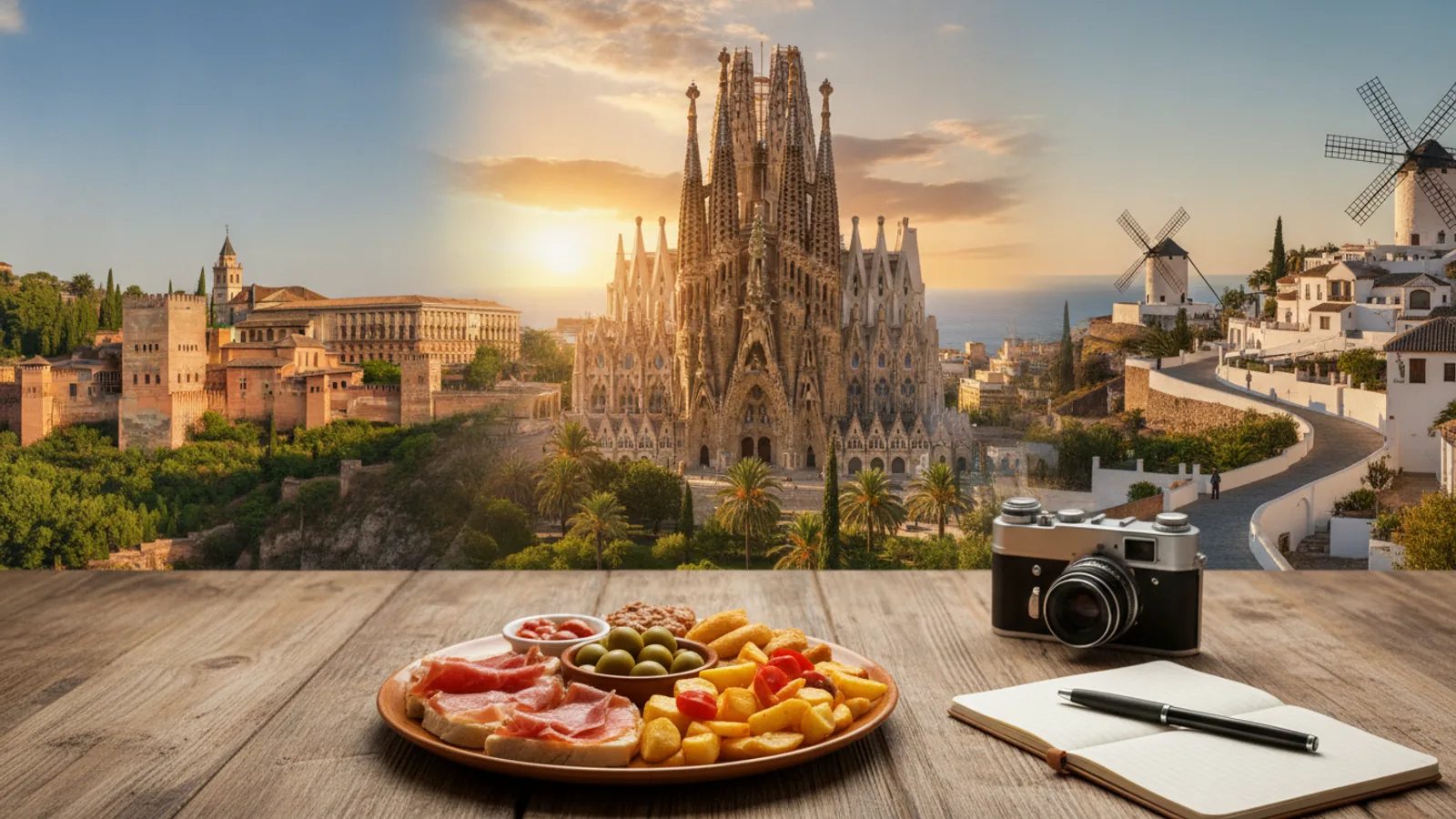
For those who dream of stepping into Spain's passionate and historic heart, the southern region of Andalusia is the undisputed choice. This is the land of fiery flamenco, sun-drenched pueblos blancos (white villages), and spectacular Moorish architecture. A journey through its "Golden Triangle"—Seville, Granada, and Córdoba—is a journey back in time. Witness the breathtaking beauty of Granada's Alhambra palace, get lost in the courtyards of Córdoba's Mezquita-Cathedral, and feel the soul of Spain at a flamenco show in Seville's Triana district. Andalusia offers a deeply authentic and culturally rich experience that feels a world away from the everyday.
Pros
- Home to world-renowned historical sites like the Alhambra
- The birthplace of flamenco, offering authentic cultural experiences
- Generally more affordable than Barcelona or Madrid
- Warm, sunny climate for most of the year
- Delicious and distinct regional tapas culture
Cons
- Summers can be intensely hot, often exceeding 100°F (38°C)
- Requires travel between cities to experience the main highlights
- Top attractions require booking tickets far in advance
Mallorca
Mallorca, the largest of Spain's Balearic Islands, is a Mediterranean paradise that offers far more than just sand and sun. While its coastline is dotted with some of Europe’s most stunning beaches—from the turquoise coves of Cala Llombards to the sweeping sands of Playa de Muro—the island's interior is equally spectacular. The dramatic Serra de Tramuntana mountain range, a UNESCO World Heritage site, provides world-class opportunities for hiking, cycling, and exploring picturesque stone villages like Deià and Valldemossa. It's the perfect destination for travelers who want to combine a relaxing beach vacation with active outdoor adventures in a breathtaking natural setting.
Pros
- Incredibly diverse and beautiful beaches
- Stunning mountain landscapes for hiking and cycling
- Charming historic towns and a sophisticated capital, Palma
- Excellent for both relaxation and outdoor adventure
- Crystal-clear turquoise waters ideal for swimming and boating
Cons
- A rental car is almost essential for proper exploration
- Can be very crowded and expensive during July and August
- Some coastal areas are overdeveloped with tourist resorts
Basque Country (San Sebastián, Bilbao)
If your travel philosophy is "first we eat," then Spain's Basque Country is your ultimate destination. This fiercely independent region in northern Spain is widely regarded as one of the world's top culinary capitals. San Sebastián boasts more Michelin stars per capita than almost anywhere on Earth, but the real magic lies in its legendary *pintxos* (Basque tapas) scene. Hopping from bar to bar, sampling elaborate, bite-sized creations is an essential cultural experience. Beyond the food, the region offers the architectural marvel of the Guggenheim Museum in Bilbao, rugged coastal scenery, and a unique culture and language that sets it apart from the rest of Spain. It’s a sophisticated and delicious adventure.
Pros
- Arguably the best culinary scene in all of Europe
- Iconic pintxos bar culture is a unique and social way to dine
- Beautiful coastal landscapes and chic cities
- Home to the world-famous Guggenheim Museum in Bilbao
- Lush, green scenery offers a different vision of Spain
Cons
- Weather is often cooler, cloudier, and rainier than southern Spain
- Can be one of the more expensive regions in the country
- Less focused on traditional, large-scale historical monuments
Madrid
As Spain's grand and energetic capital, Madrid is a city that pulsates with life around the clock. It's the perfect destination for culture vultures and night owls. By day, you can immerse yourself in one of the world's most impressive art collections along the Paseo del Arte, home to the Prado, Reina Sofía, and Thyssen-Bornemisza museums. By night, the city transforms. The Madrileño tradition of *ir de tapas* (tapas bar hopping) is an art form here, and the city's nightlife is legendary, with clubs and bars staying packed until sunrise. While it lacks a beach or a single defining landmark like Barcelona's Sagrada Familia, Madrid's regal atmosphere, magnificent parks, and relentless energy make it a truly captivating urban experience.
Pros
- Home to a world-class trifecta of art museums
- One of the best nightlife scenes in Europe
- Incredible tapas culture with endless options
- Beautifully maintained parks, like the vast El Retiro
- Excellent central hub for day trips across Spain
Cons
- Summers are extremely hot and dry
- Lacks the immediate "wow factor" of a single iconic monument
- Being landlocked, it has no beaches
Buying Guide: How to Choose the Best Place in Spain for You
Spain is an incredibly diverse country, and the "best" place to visit depends entirely on your personal travel preferences. To help you make the right choice for your 2026 trip, consider these key factors.
Identify Your Travel Style
What kind of vacation are you looking for? Your answer will quickly narrow down the options.
- Cultural Immersion & History: If you love museums, ancient architecture, and deep history, prioritize Andalusia for its Moorish palaces or Madrid for its world-class art.
- Food & Drink Focused: If your trip revolves around culinary experiences, the Basque Country is in a league of its own. However, Barcelona and Madrid also have phenomenal food scenes.
- Beach & Relaxation: For a classic sun-and-sand getaway combined with natural beauty, Mallorca and the other Balearic Islands are perfect. Barcelona offers a unique city-and-beach combination.
- Outdoor Adventure: While Mallorca excels with its hiking and cycling in the Tramuntana mountains, Northern Spain (including the Basque Country) also offers lush landscapes and coastal trails in the Picos de Europa National Park.
Consider the Best Time to Visit
Your travel dates can significantly impact your experience in terms of weather, crowds, and cost.
- Peak Season (July-August): Expect hot weather (especially in the south), large crowds, and the highest prices for flights and accommodation. This is the best time for a pure beach holiday but can be overwhelming in major cities.
- Shoulder Seasons (April-June & September-October): This is the sweet spot for visiting most of Spain. The weather is pleasantly warm, crowds are more manageable, and prices are generally lower. Spring brings blooming flowers, while fall offers grape harvests in wine regions.
- Off-Season (November-March): Ideal for budget travelers and those looking to explore cities without crowds. Southern Spain remains mild, but the north can be cold and rainy. Note that some tourist services in beach areas may be closed.
Plan Your Itinerary Length
Spain is a large country, and trying to see too much in a short time can be exhausting. Be realistic about what you can accomplish.
- 3-4 Days: Focus on a single city, like Madrid, Barcelona, or Seville.
- 7-10 Days: You can comfortably explore one entire region (like Andalusia) or combine two major cities (e.g., Madrid and Barcelona, connected by a high-speed train).
- 14+ Days: This allows for a more comprehensive trip, enabling you to combine multiple regions, such as Madrid, Andalusia, and Barcelona, for a grand tour of Spain's highlights.
Getting Around Spain
Spain's infrastructure makes it easy to travel between destinations.
- Trains: The Renfe high-speed train network (AVE) is fast, efficient, and comfortable, connecting major cities like Madrid, Barcelona, Seville, and Valencia. It's often the best way to travel long distances.
- Flights: For longer journeys, like from Barcelona to Andalusia, or to reach the Balearic or Canary Islands, budget domestic flights are abundant and affordable.
- Rental Car: Renting a car is the best way to explore rural areas and regions with scattered attractions, such as Andalusia's white villages, the Basque coastline, or the island of Mallorca.
Final Verdict: Best Places To Visit In Spain 2026
After a comprehensive analysis of Spain's most compelling destinations, Barcelona stands out as our Best Overall choice for 2026. It offers an unparalleled combination of world-class architecture, a vibrant food culture, beautiful city beaches, and a distinct, energetic atmosphere that caters to nearly every type of traveler.
While Barcelona is our top all-around pick, the best destination for you depends on your priorities. If your passion is history and you want to experience the soul of traditional Spain, the sun-drenched region of Andalusia is an unbeatable choice. For an escape into stunning natural landscapes and some of Europe's best beaches, Mallorca delivers in spades. And for anyone who travels to eat, the culinary pilgrimage to the Basque Country is a truly world-class experience.
Ultimately, any of these destinations will provide an incredible Spanish adventure. But for the most complete and dynamic experience in a single location, Barcelona remains the top recommendation.
Best Places To Visit In Spain 2026 FAQ
What is the best month to visit Spain?
The best months to visit Spain are generally May, June, and September. During this time, you'll experience warm, sunny weather that's perfect for both sightseeing and beach activities, but you'll avoid the intense heat and the largest crowds of July and August. April and October are also excellent shoulder-season months with fewer tourists and lower prices.
How many days do you need to see Spain?
To get a good feel for Spain, a trip of 7 to 10 days is recommended. This allows you to explore one major region, like Andalusia, in depth or to visit two major cities, such as Madrid and Barcelona. For a more comprehensive tour that includes multiple regions, a minimum of 14 days is ideal to avoid feeling rushed.
Is it better to visit Madrid or Barcelona?
This depends on your personal preference. Choose Barcelona if you're drawn to unique architecture (Gaudí), a lively beach scene integrated with city life, and a distinct Catalan culture. Choose Madrid if you're passionate about world-class art museums (the Prado), a more traditional Spanish atmosphere, grand boulevards, and a central location that's perfect for day trips to historic cities like Toledo and Segovia.
What is the best way to travel between cities in Spain?
For travel between major cities like Madrid, Barcelona, Seville, and Valencia, Spain's high-speed train system (AVE) is the best option. It is fast, comfortable, and efficient, often taking you from city center to city center more quickly than flying. For exploring rural regions or coastlines, renting a car provides the most flexibility.